Explaining The Benefits Of
Rain Barrels
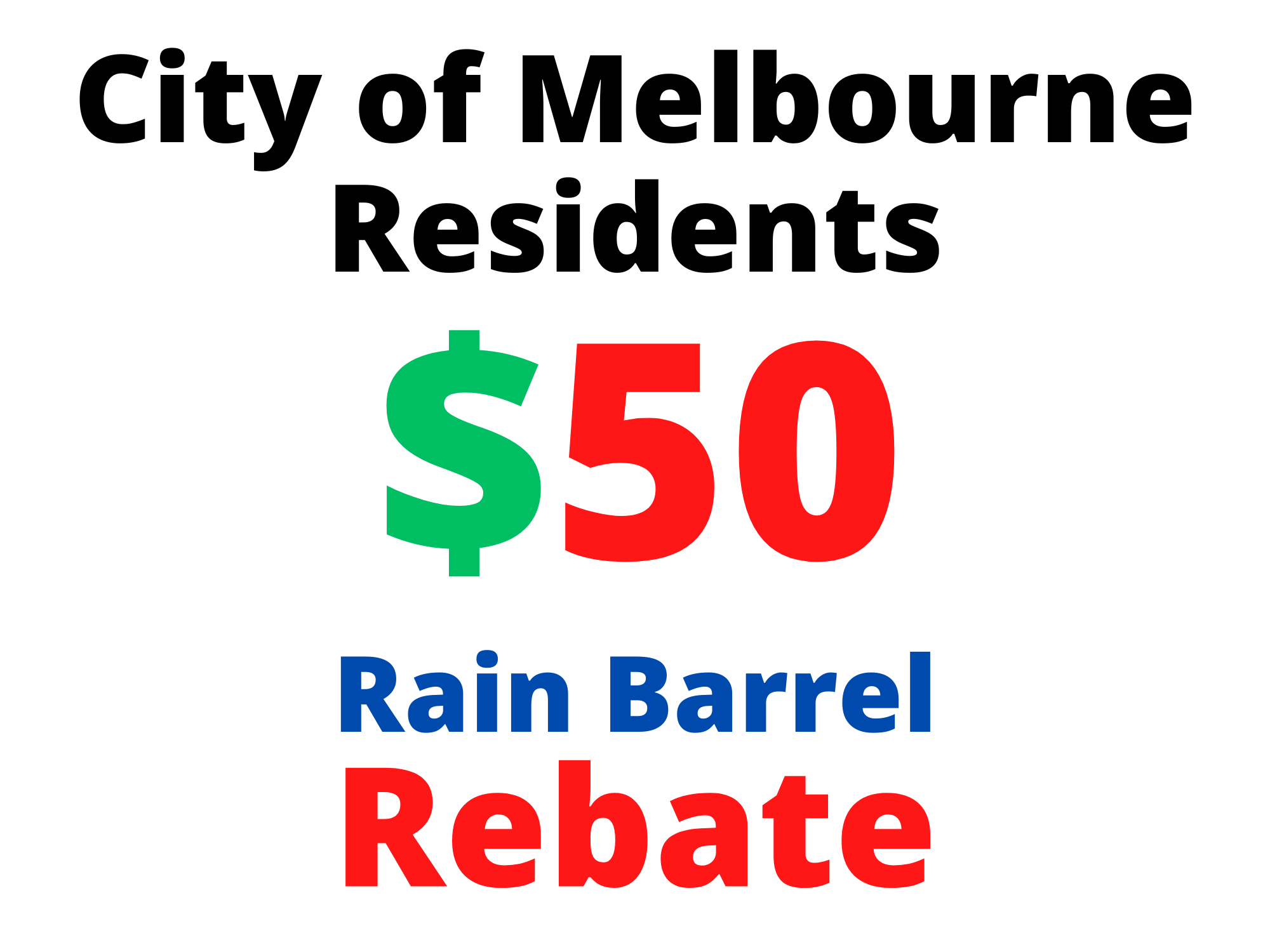
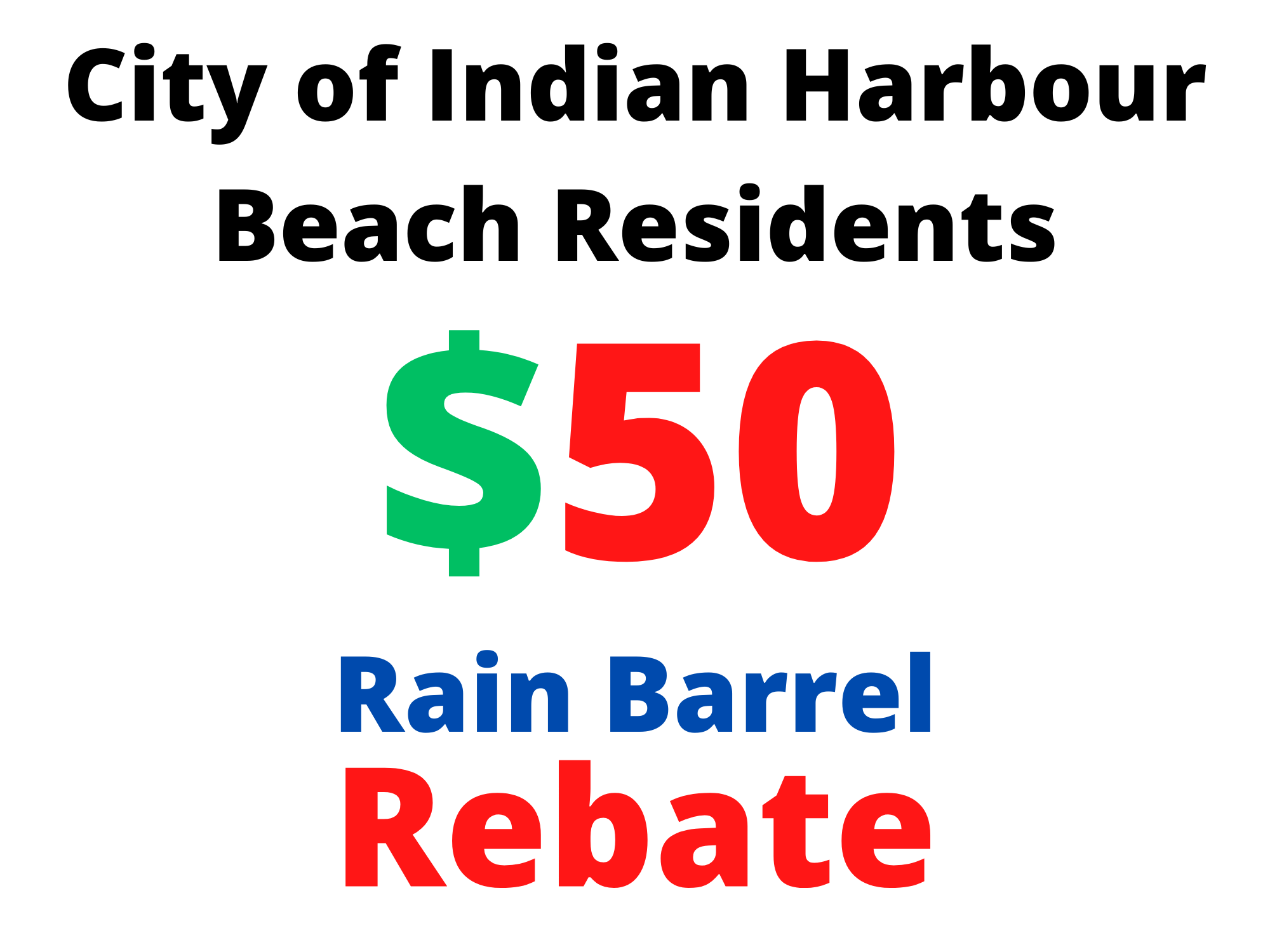
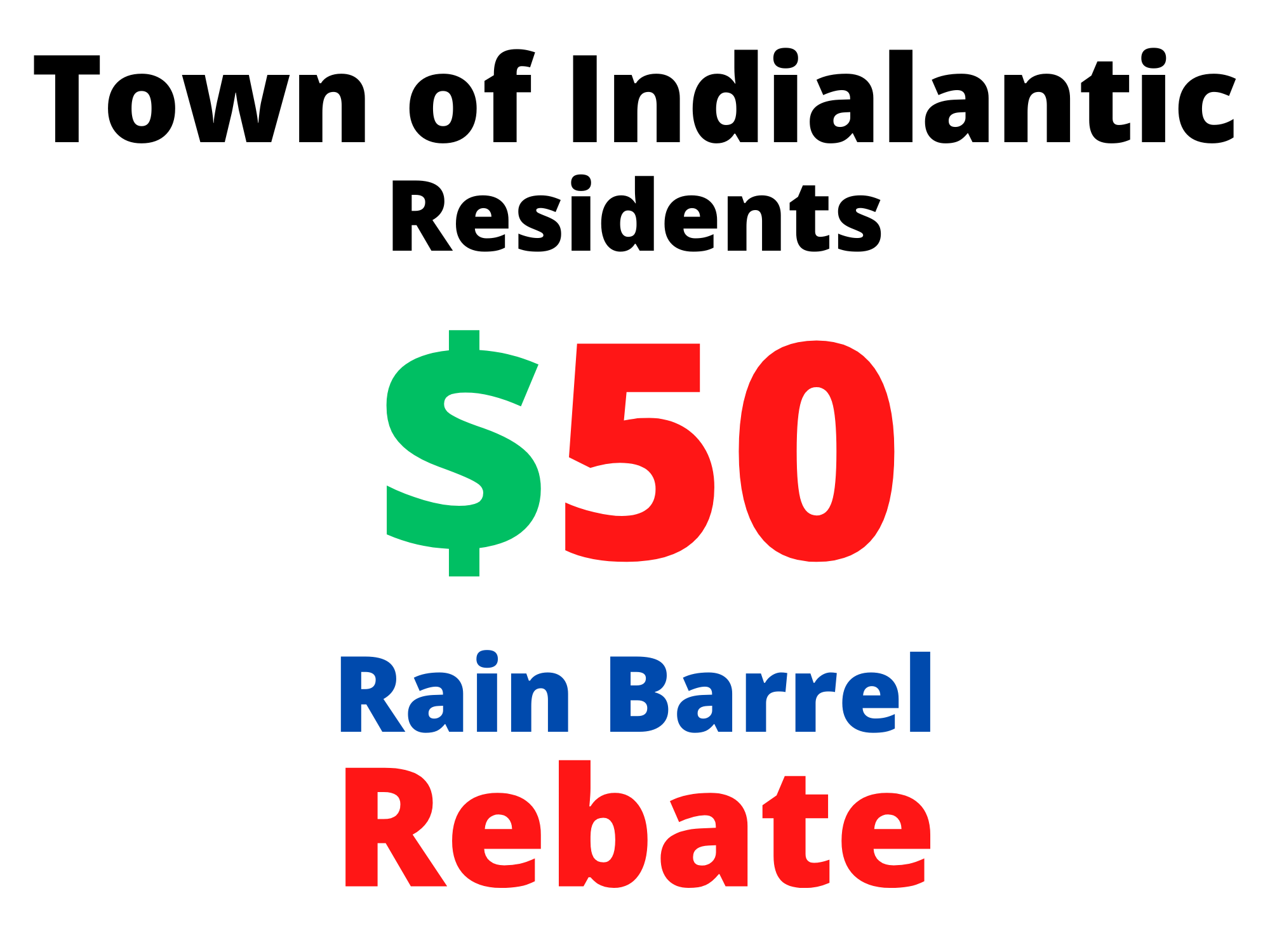
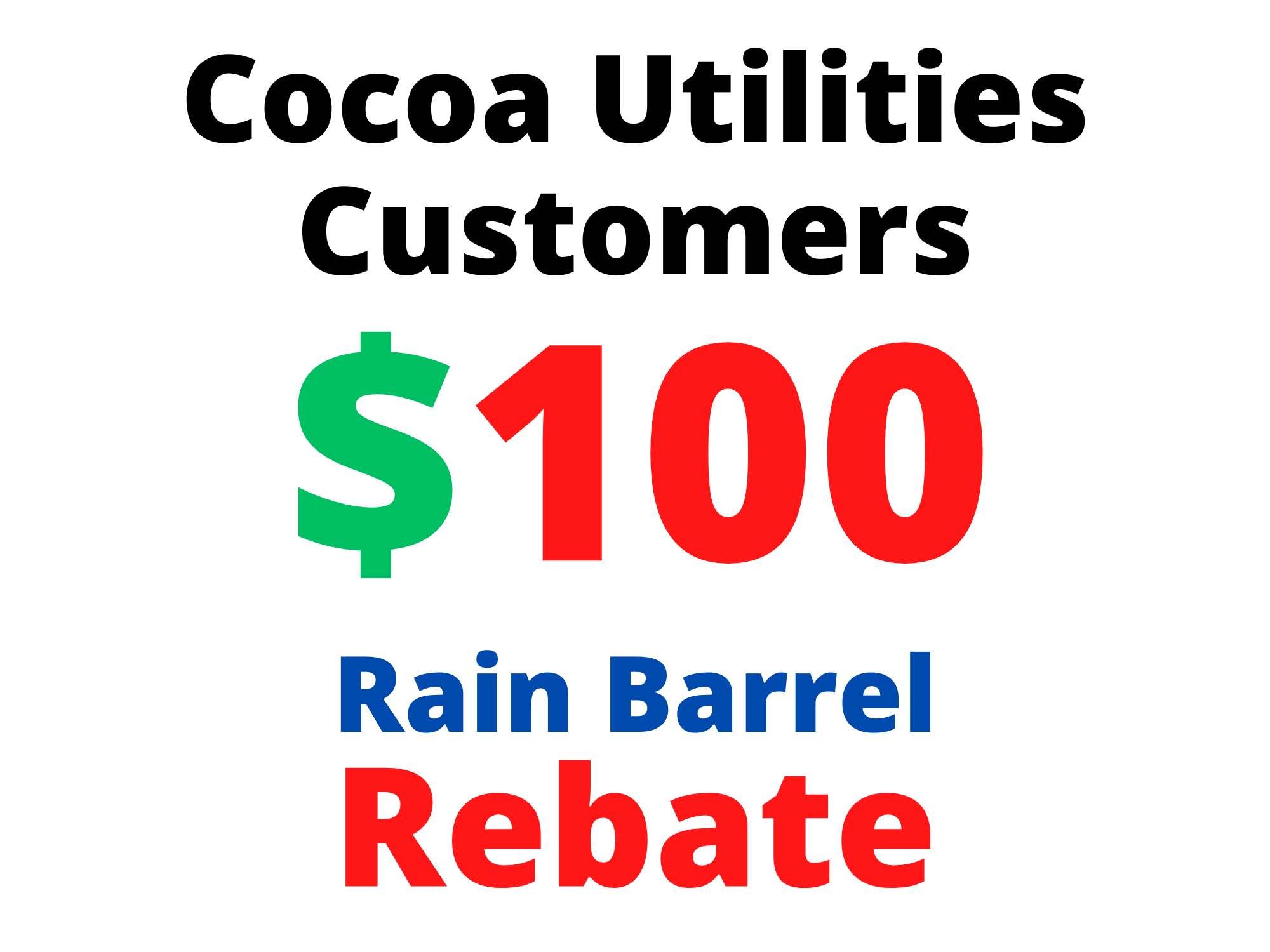
Limited Local Third Party $50 Rain Barrel Rebates Are Available.
Call To Place Your Order (321) 210-8738.
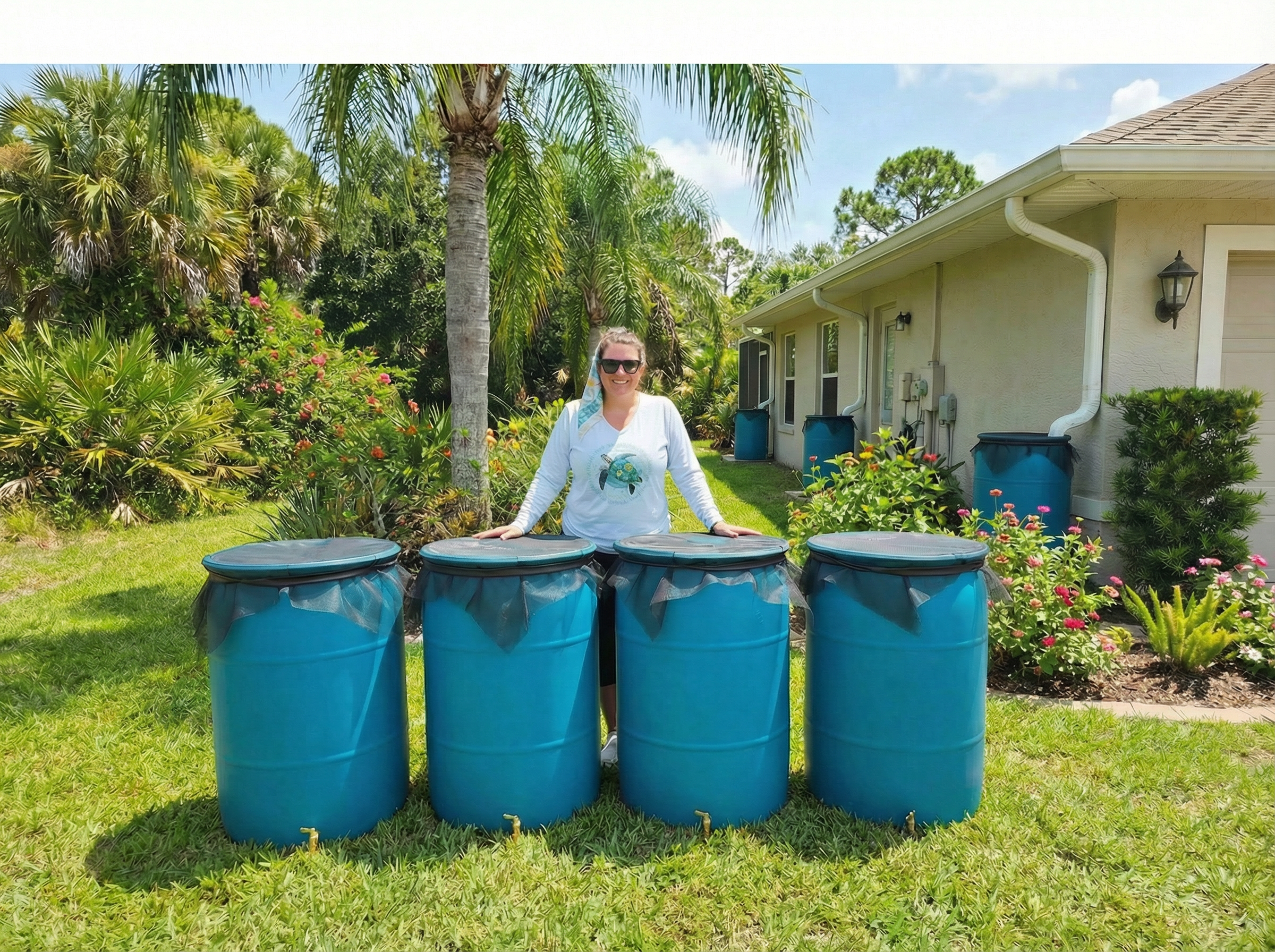
Installing rain barrels at your business or home is a simple and proactive step to conserve water, reduce polluted stormwater runoff, protect the Indian River Lagoon and local waterways, replenish groundwater, and promote sustainable practices.
Reduce stormwater Runoff Pollution.
Rain barrels help capture and store rainwater, usually from rooftops, which would otherwise become stormwater runoff. As runoff flows across streets, driveways, lawns, and other surfaces, it can pick up pollutants such as soil and sediment, fertilizers, pesticides, pet and wildlife waste, trash, vehicle oils and chemicals, grass clippings, and yard debris. These pollutants are then carried through storm drains, ditches, and canals directly into local waterways.
By reducing runoff volume, rain barrels help decrease the amount of pollution entering rivers, lakes, estuaries, and retention ponds. Cleaner waterways support healthier fish and wildlife populations, improve water quality, preserve seagrass, reduce algae blooms, and help protect public health and recreational opportunities for communities.
Reduces Erosion & Flooding.
Stormwater runoff is a leading cause of erosion, localized flooding, and degradation of waterways. During rain events, water rapidly flows from rooftops, driveways, roads, and other hard surfaces, increasing runoff volume and velocity. This surge of water can erode soils, destabilize shorelines and stream and pond banks, overwhelm stormwater infrastructure, and contribute to flooding in neighborhoods and low-lying areas.
Rain barrels help reduce these impacts by capturing and temporarily storing rainwater at the source before it becomes runoff. By slowing the release of stormwater and reducing peak flows, rain barrels help decrease erosion, lessen flooding risks, and reduce the burden on local drainage systems. Collectively, widespread use of rain barrels can play an important role in protecting waterways, improving community resilience, and supporting sustainable stormwater management.
Conserve Water, Protect Drinking Water Supplies, & Reduce Utility Bills.
Outdoor irrigation is one of the largest uses of residential drinking water in the United States, with a significant portion applied to turfgrass lawns. According to the U.S. Environmental Protection Agency (EPA), outdoor water use accounts for nearly 30% of total household water consumption nationwide, and in many parts of the country, that number can exceed 50% during warmer months.
Rain barrels provide a simple and effective way to capture free rainwater and reuse it for watering lawns, gardens, native plants, trees, landscaping, and other non-potable uses. Every gallon of rain-barrel-harvested water used is a gallon of treated drinking water that does not need to be withdrawn, processed, pumped, and delivered by a utility.
By reducing demand on municipal water supplies, rain barrels help conserve valuable drinking water resources, lower household water bills, and support long-term water sustainability.
Plants Love Rainwater.
Many gardeners and horticultural experts consider rainwater the "gold standard" for watering plants. While plants can grow with municipal or well water, rainwater often provides several natural advantages that promote healthier growth and stronger root systems
1. Rainwater Is Naturally Soft
Unlike many municipal and well water sources, rainwater contains very low levels of dissolved minerals, salts, calcium, and magnesium. Over time, hard water can cause mineral buildup in soils and containers, making it more difficult for plants to absorb nutrients.
2. No Chlorine or Water Treatment Chemicals
Municipal drinking water is commonly treated with chlorine or chloramine to protect public health. While safe for people, these chemicals can impact beneficial soil microorganisms that help plants access nutrients. Rainwater contains no added treatment chemicals.
3. Contains Naturally Available Nutrients
As rain falls through the atmosphere, it can absorb small amounts of nitrogen and other nutrients. Thunderstorms, in particular, can convert atmospheric nitrogen into forms that become available to plants, providing a natural fertilizer effect.
4. Better Soil Health
Rainwater helps maintain healthy soil biology by supporting beneficial bacteria, fungi, earthworms, and other microorganisms that are essential for nutrient cycling and root development.
5. Ideal pH for Many Plants
Rainwater is typically slightly acidic, often with a pH between 5.5 and 6.5. Many ornamental plants, vegetables, native plants, and flowering species thrive in this range because nutrients are more readily available to roots.
6. Warmer and More Plant-Friendly
Water stored in rain barrels is often closer to ambient outdoor temperatures than cold groundwater from a well. Extremely cold water can sometimes shock plant roots, especially in container gardens and tropical landscapes.
Rainwater vs. Municipal Water vs. Well Water Comparison Table.
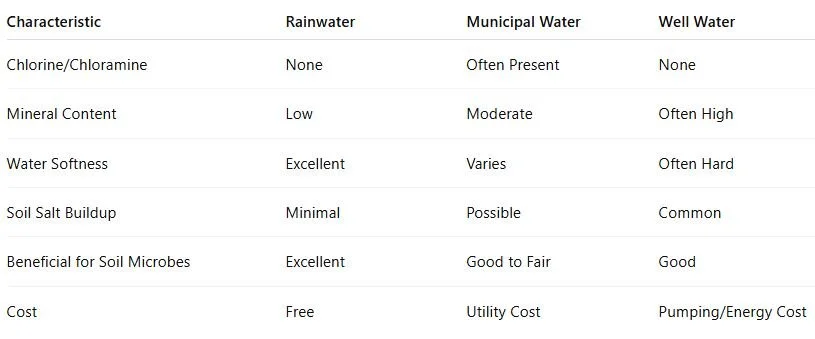
Rainwater is nature's irrigation system. It provides plants with clean, untreated, naturally soft water while conserving valuable drinking water supplies. By harvesting rainwater, homeowners can improve plant health, reduce utility costs, and help protect local water resources at the same time.
Protect Groundwater & Recharge Aquifers.
Groundwater is one of Florida's most important natural resources, supplying drinking water to millions of residents and supporting springs, rivers, wetlands, and the Indian River Lagoon. Aquifers are naturally replenished when rainfall soaks into the ground and slowly percolates through soils into underground water-bearing formations.
As communities become more developed, rooftops, roads, parking lots, and other impervious surfaces prevent rainwater from infiltrating the soil. Instead, rainfall is quickly diverted into storm drains and canals, reducing groundwater recharge while increasing stormwater runoff and pollution.
Rainwater harvesting for reuse helps restore a more natural water cycle by capturing rainwater and allowing it to be used where it falls. When harvested rainwater is applied to lawns, gardens, trees, and landscaping, much of that water infiltrates into the soil, where it can replenish soil moisture and contribute to groundwater recharge. This process helps support healthy aquifers, reduces demand on municipal water supplies, and promotes long-term water sustainability.
By reducing reliance on groundwater pumping for irrigation and encouraging local infiltration, rain barrels help conserve Florida's precious freshwater resources for future generations.
Did You Know?
Florida receives approximately 50–55 inches of rainfall annually, yet much of this water is rapidly discharged through stormwater systems before it can recharge aquifers. Capturing and beneficially reusing rainwater helps keep more water in the local environment, where it can support plants, soils, groundwater, and natural ecosystems.
Limited Local Third Party Rain Barrel Rebates Are Available
Let’s Make Saving Water Popular
Please send us your rain barrel setup photos and stories to be shared with our water conservation friends.
Thank You To Our Rain Barrel Program Sponsors And Contributors!